
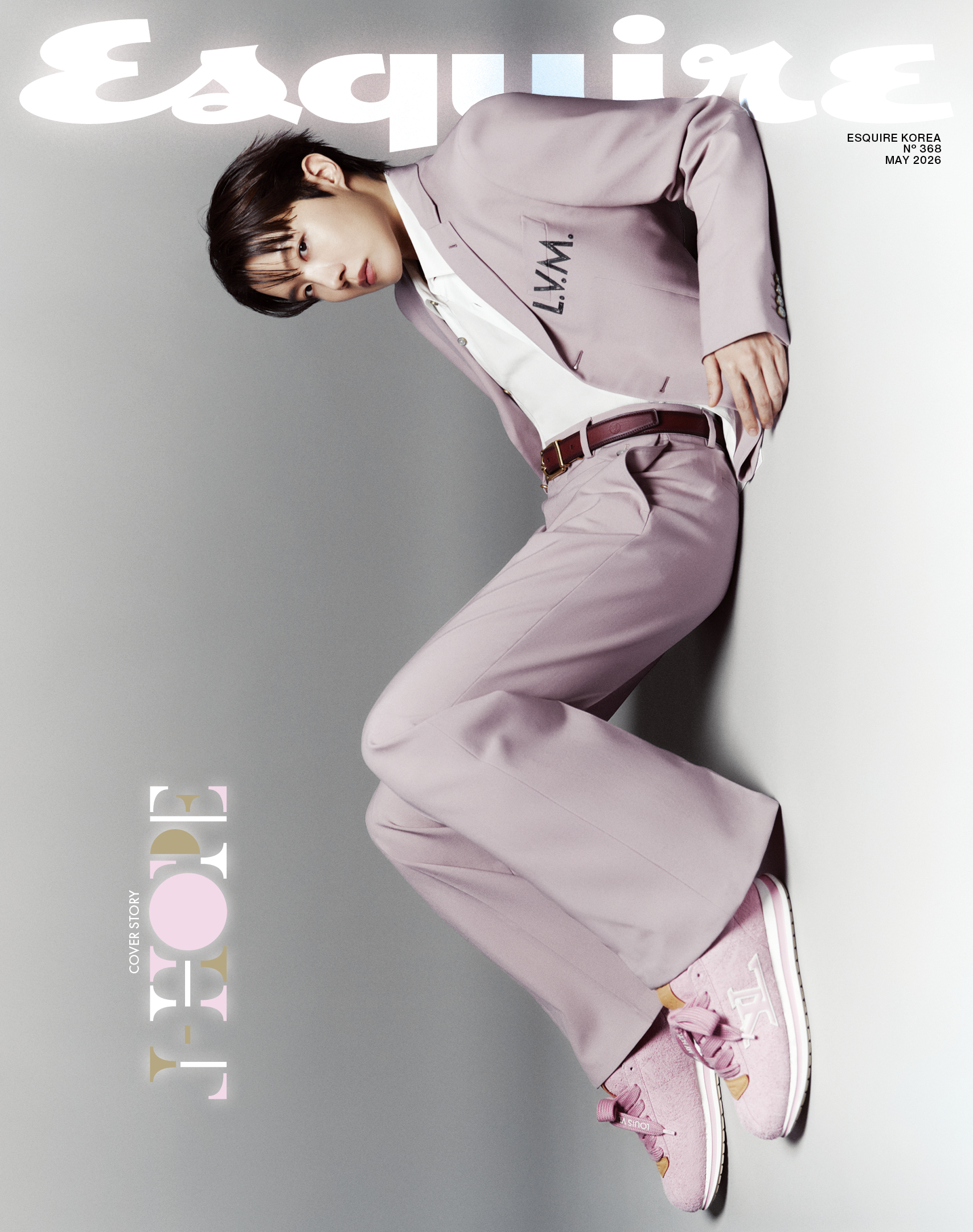
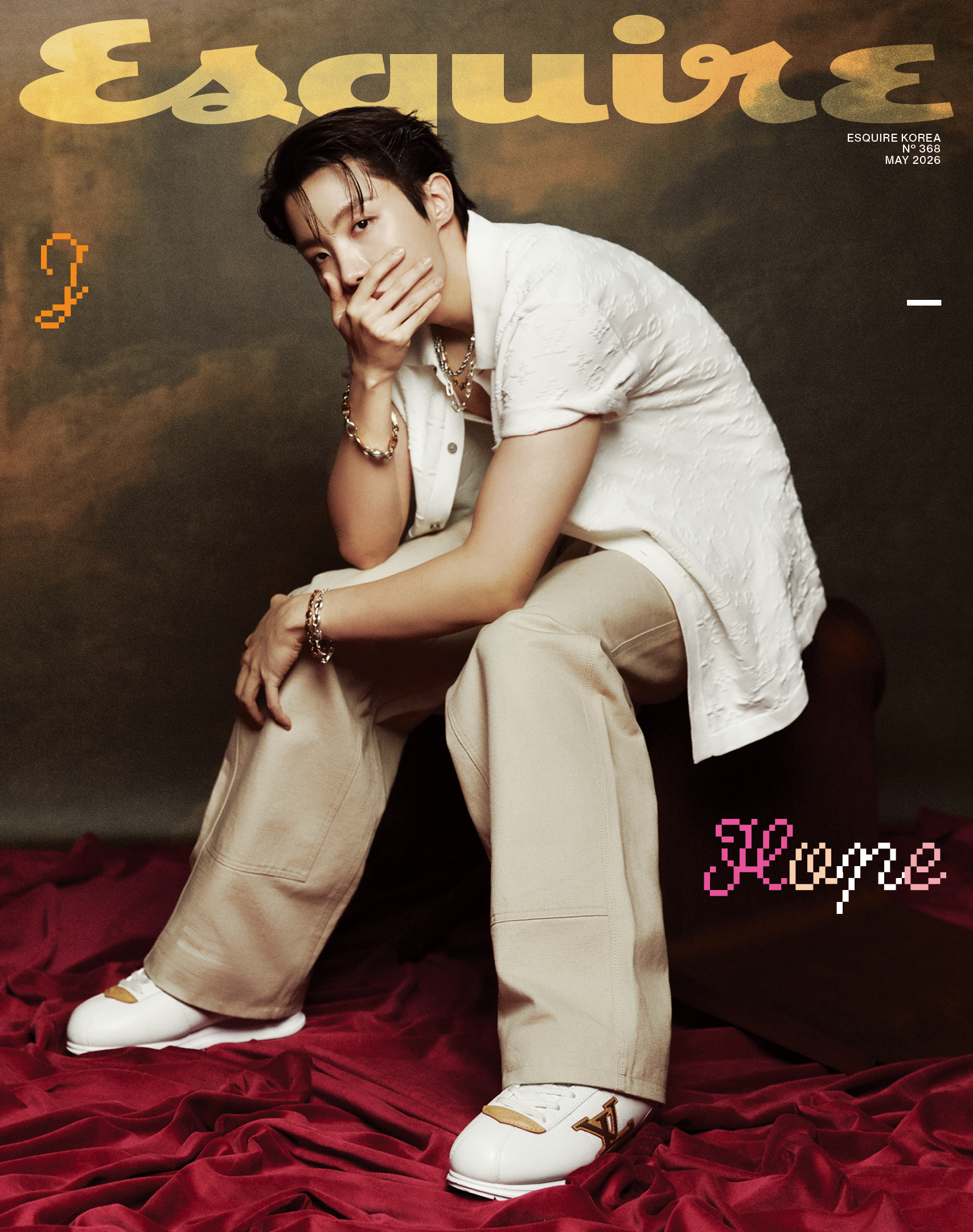

ESQUIRE ISSUE 2026
J-HOPE (BTS) INTERVIEW
- The title track “Arirang” from the album <ARIRANG> is a folk song that feels very familiar to us. At the same time, it’s also a song whose emotions are so complex that it almost feels impossible to truly translate. What made you choose this song?
“Arirang” really is a deeply familiar and comforting folk song that has melted into our hearts. If I had to explain why… I guess it’s because we are Korean! We believed it could serve as the core that reflects the roots shared by all seven members. And since it’s a folk song that has been remembered and sung for generations, we also wanted to express our hope that BTS’s music, too, could represent an era and remain precious in people’s hearts for a long, long time.
-<ARIRANG>is a 14-track full-length album symbolizing resilience and longing. As I listened, I felt that while it explores themes like identity and belonging, it also clearly presents each member’s individual direction. J-Hope, you’re credited on so many tracks—what song do you think best represents BTS’s identity?
Since this is our first full-length album in quite a while, every single song on it feels incredibly precious to us. But if I had to choose the one that best represents the identity of this album, I’d say it’s probably the title track, “SWIM.” It contains our attitude toward life and love as we live today, so I think it’s a song filled with sincerity that reflects not only who BTS is now, but also hints at who BTS will become in the future.
-I’m also curious about how J-Hope worked on these songs. Even aside from the title track, is there a song you feel especially attached to?
(This interview was conducted on March 21, right after the comeback stage.)
After finishing my schedule at Lollapalooza in Germany, I took about a week off before attending sessions in Los Angeles. At the time, Jungkook was working on a song called “Hooligan.” I worked together with him by layering guide lines over the structure he had already created, while organizing whether the song suited our team and figuring out its overall direction. More formally, I participated in the sessions for “2.0” and “Aliens,” and even worked together on the topline for the later parts of the songs. “2.0” was actually a song I first suggested to the producers from the very beginning of the theme stage, because I felt it contained a message that BTS absolutely needed for its next chapter. Looking back, because of my role, I think I naturally worked with performance-oriented songs more in mind—songs we could really bring to life on stage.
-Just like meeting J.Cole at Lollapalooza led to “on the street,” was there a similarly fateful meeting or coincidence during the making of <ARIRANG>?
This time, I met so many different producers and learned a tremendous amount from them. In particular, I really connected with El Guincho, who worked on “Hooligan.” If I get the chance, I’d definitely love to work with him again.
-During the comeback performance, after the first verse of “Body to Body,” the moment you shouted “It’s so tight” and stepped forward was incredibly cool.
“Body to Body” is actually one of my favorite songs, and I personally loved how that moment heightened the tension in line with the lyrics.
-This marks your comeback after 3 years and 9 months. I imagine there must have been countless emotions exchanged while the seven of you gathered again to make music together.
Now, I’m simply grateful that these seven people are together again. This moment exists because all of our hearts aligned. I think the moment right before stepping onto the stage at Gwanghwamun was probably the most overwhelming emotionally. It was the very first moment the seven of us became one again.
-This tour is scheduled for 82 shows across 34 countries and cities. It’s a massive tour that will likely go down in music history. Is there a moment you’re especially looking forward to—or perhaps a schedule that feels especially daunting?
I think there will definitely be important moments during this tour that we absolutely have to deliver as a team. I do feel pressure and concern about how well we can maintain and convey that momentum. Since it’s also a stadium tour, variables like the weather are honestly a bit scary. Still, I want us to overcome all of that and create truly amazing performances. We just have to push through it well.
-Meanwhile, the performance at Gwanghwamun Square was directed by British director Hamish Hamilton, known for directing the Super Bowl Halftime Show and the Oscars. He described this production as “one of the most challenging” works due to its “pure logistical complexity.” What was the most memorable part of preparing for the stage?
I think there were so many things that needed careful consideration—not only the artist, cultural symbolism, and showmanship, but also the sense of order appropriate for a performance of that scale. I could really feel how thoughtfully Director Hamilton approached those aspects. Above all, I’m deeply grateful that everything was completed safely without any accidents. If given the opportunity, I’d love to create more incredible visuals together with him again someday.
-By the time this interview is published, the Netflix documentary <BTS: The Return> will probably already be out. I haven’t seen it yet, but I heard it captures the process of the seven members finding each other again—from after military discharge to the recording sessions in Los Angeles. Still, I’m actually more curious about what you did when the cameras weren’t rolling.
We went out to eat a lot of delicious food together and shopped quite often too. It might sound funny, but we even bought computers together and played games together. (Laughs) Honestly, it really wasn’t much different from seven close guy friends hanging out together.
-Since your first pictorial as ambassadors for Louis Vuitton, quite a lot of time has passed. As artists standing at the intersection of fashion and art, how do you think those experiences have influenced your music or performances?
I’ve always believed that fashion is deeply connected to music. The same goes for performance. Depending on what you wear, the atmosphere and message you can express change completely, so it’s something I’ve always considered very important. In that sense, I really want to show many different sides of ourselves during this concert as well.
'Magazine Interview' 카테고리의 다른 글
| BAZAAR JUNE issue 2026 (JUNGKOOK BTS INTERVIEW) (0) | 2026.05.29 |
|---|---|
| VOGUE JUNE issue 2026 (G-DRAGON BIGBANG INTERVIEW) (0) | 2026.05.27 |
| DAZED & CONFUSED MAY issue 2026 (ENHYPEN INTERVIEW) (0) | 2026.04.29 |
| MARIE CLAIRE MAY issue 2026 (STRAY KIDS LEE KNOW INTERVIEW) (1) | 2026.04.24 |
| ELLE APR issue 2026 (SKZ HYUNJIN INTERVIEW) (0) | 2026.04.15 |


